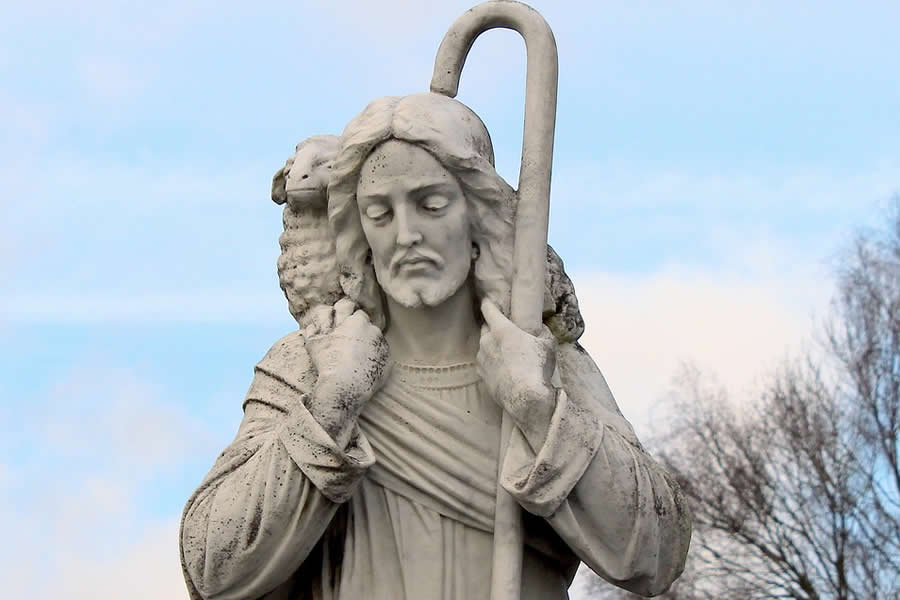
Good Shepherd Sunday
by Fr. Jerome Cayetano | 04/26/2026 | The WORD in other wordsEvery Fourth Sunday of Easter is called the "Good Shepherd Sunday" because the readings are centered on the attitudes and attributes of a Good Shepherd. Jesus is presented as the "Good Shepherd" par excellence. In fact, this is one of the most beautiful descriptions of Jesus. The early Christians depict this well. I remember, when went down to the catacombs in Rome, several years ago, a saw a statue of a Roman boy carrying a sheep on his shoulder which aptly describes Jesus as the Good Shepherd.
Continue
WIth that, their eyes were opened and they recognized Him
by Fr. Jerome Cayetano | 04/19/2026 | The WORD in other wordsOne of the most dramatic appearance stories of Jesus in the Gospels is the appearance of Jesus on the road to Emmaus. The two disciples were walking on the road to Emmaus, sad, disgruntled and downcast. Why? Because their expectation of Jesus from Nazareth whom they considered as a prophet with mighty word and deed before God and people was not met. And they were hoping that he would redeem Israel and how the chief priests and scribes handed him to be crucified.
Continue
Divine Mercy Sunday
by Fr. Jerome Cayetano | 04/12/2026 | The WORD in other wordsIf you want information, I will always say: "Google it". You can practically get all information in the Google platform. I considered it to be the modern day Encyclopedia. According to Google, the "Divine Mercy Sunday originates from the private revelations of St. Maria Faustina Kowalska, a Polish nun who recorded in her diary that Jesus a wanted feast day dedicated to his profound mercy on the Sunday after Easter.” St. Pope John Paul II formally established it on April 30, 2000, thus it is celebrated annually throughout the Catholic Church on the Second Sunday of Easter.
Continue
Let Us Rejoice and Be Glad! Alleluia!
by Fr. Jerome Cayetano | 04/05/2026 | The WORD in other wordsAmong the women disciples of Jesus that I admire most is Mary Magdalene. Why? Because she was a very courageous woman. She was not afraid of darkness. She went alone to the tomb of Jesus very early in the morning. Indeed, she profoundly missed the loving presence of Jesus. Her action expressed her deep love of Him. But when she saw the stone removed in the tomb, she immediately dashed to report the incident to Peter and John by saying: "They have taken the Lord from the tomb, and we don't know where they put him." (Jn 20:2)
Continue